Arboretum Tree Inventory Map
THE TEN MOST IMPORTANT TREES IN THE HISTORIC ARBORETUM
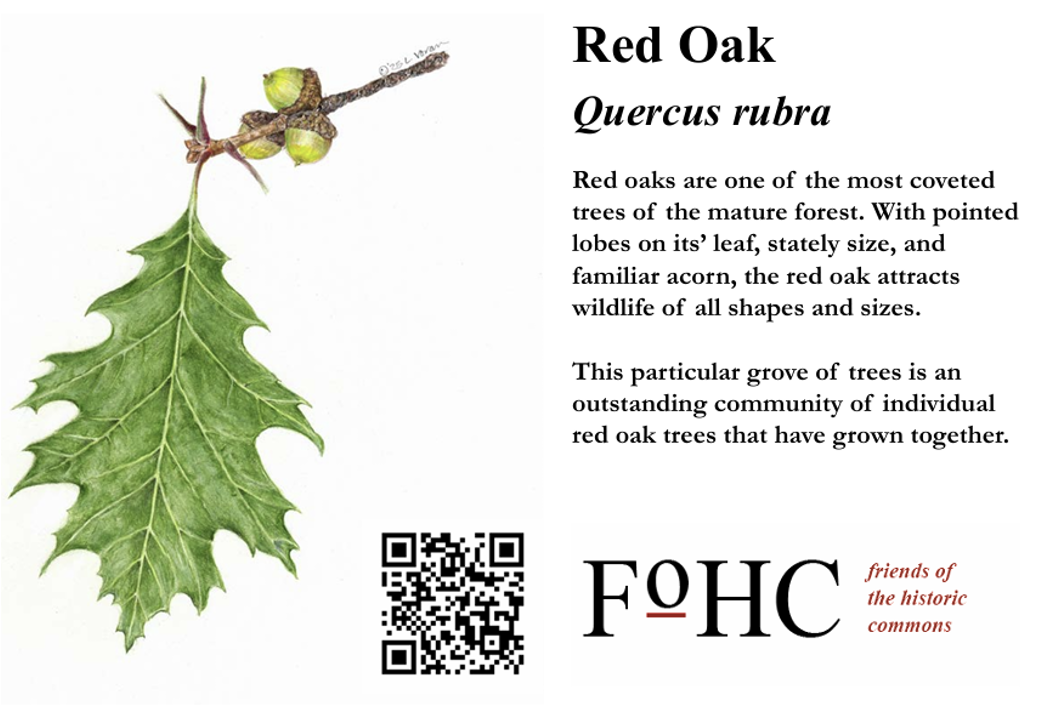
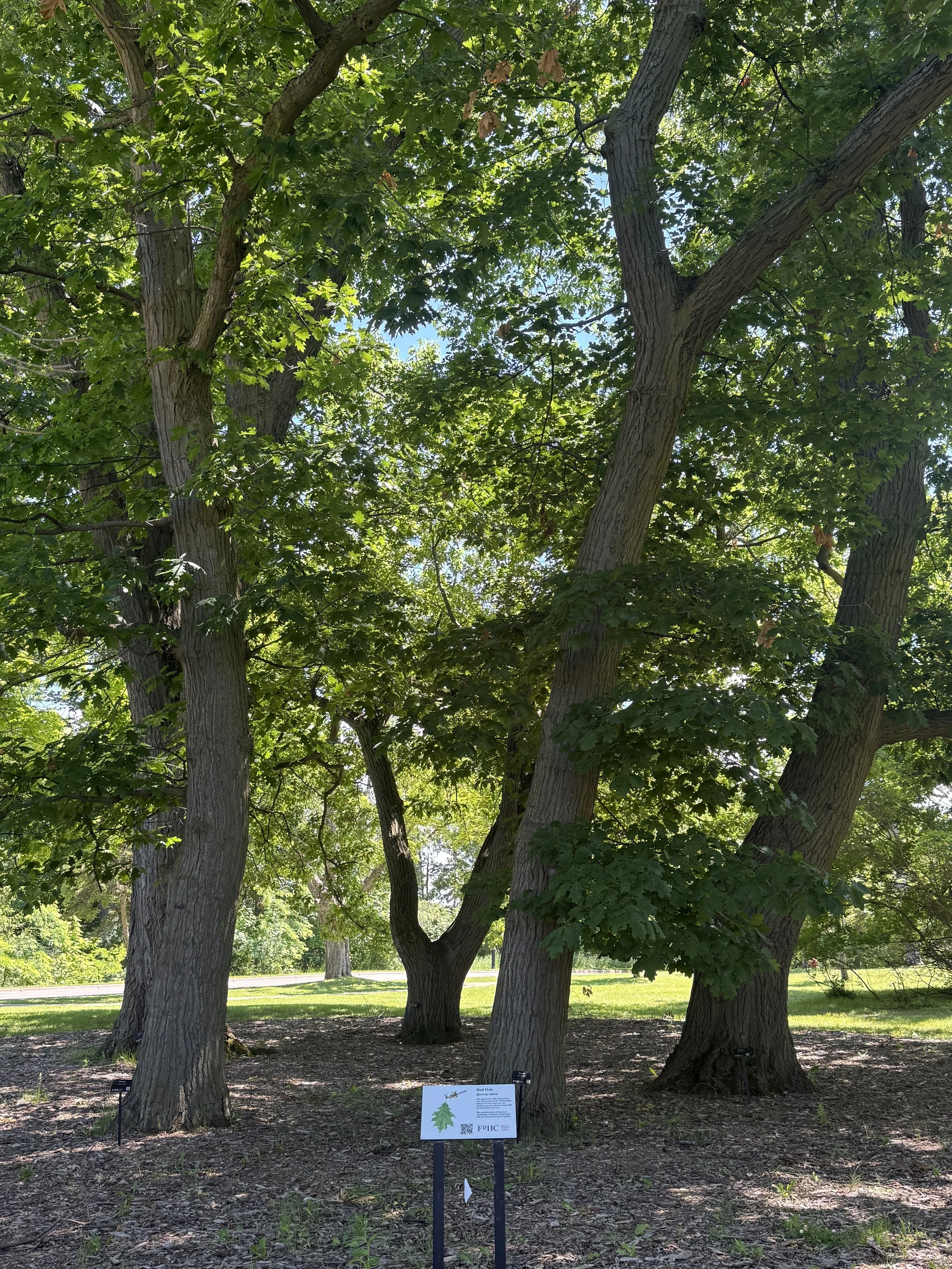
Red Oak (Quercus rubra)
Red oaks are one of the most coveted trees of the mature forest. With pointed lobes its’ leaf, stately size, and familiar acorn, the red oak attracts wild-life of all shapes and sizes.
This particular grove of trees is an outstanding community of individual red oak trees that have grown together.
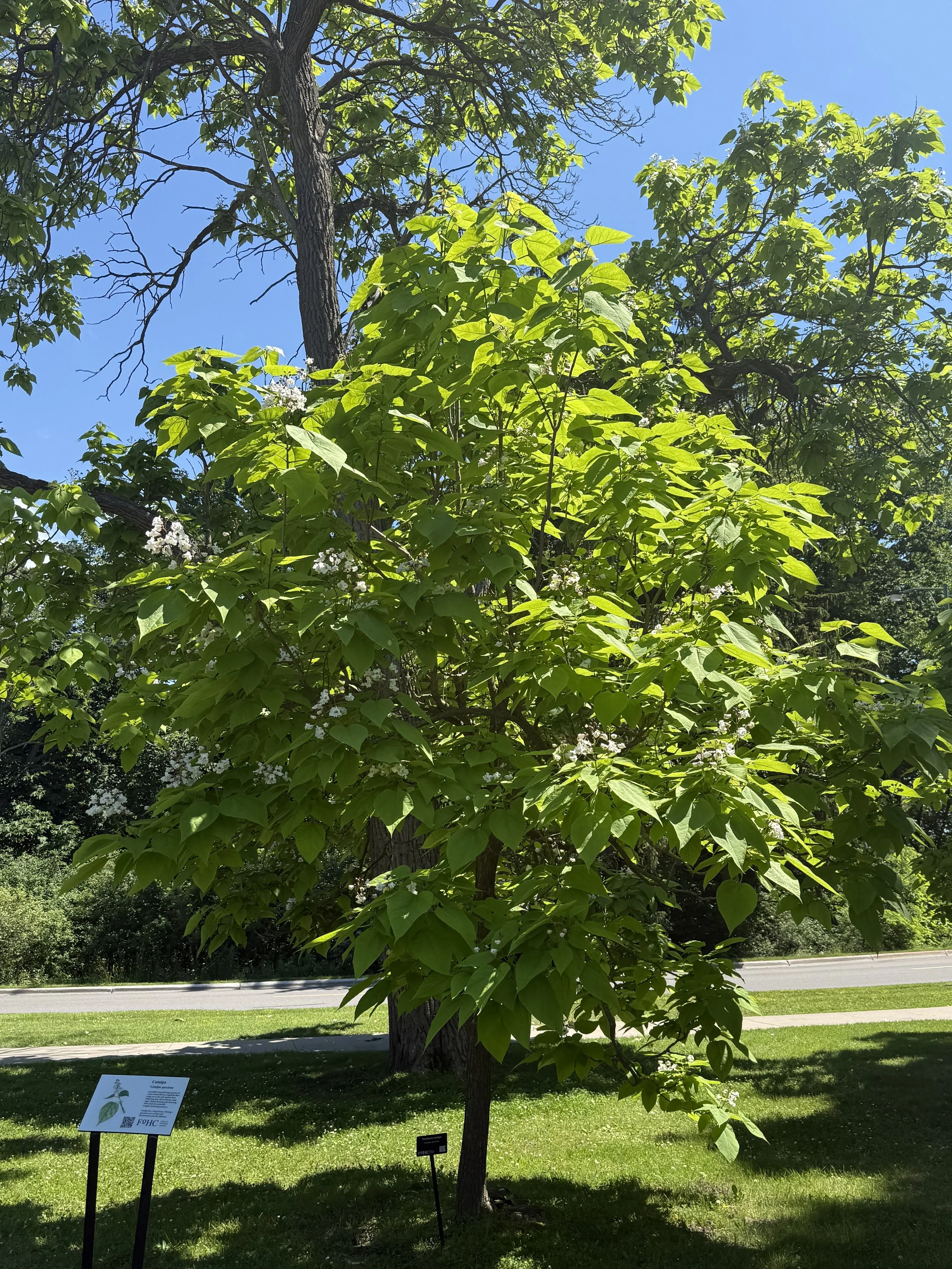
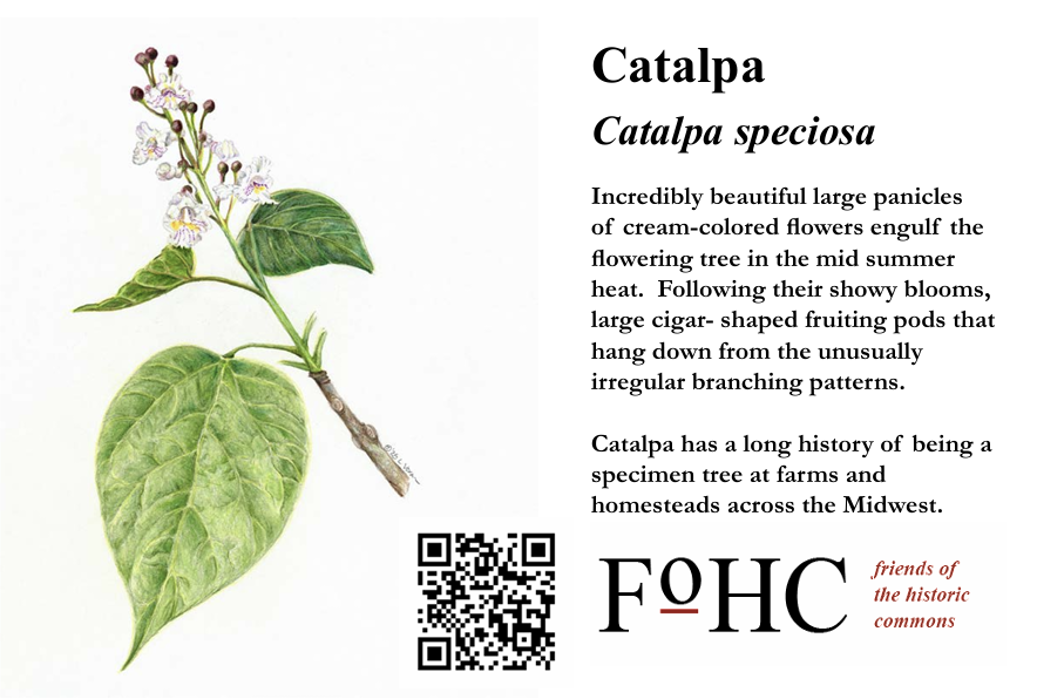
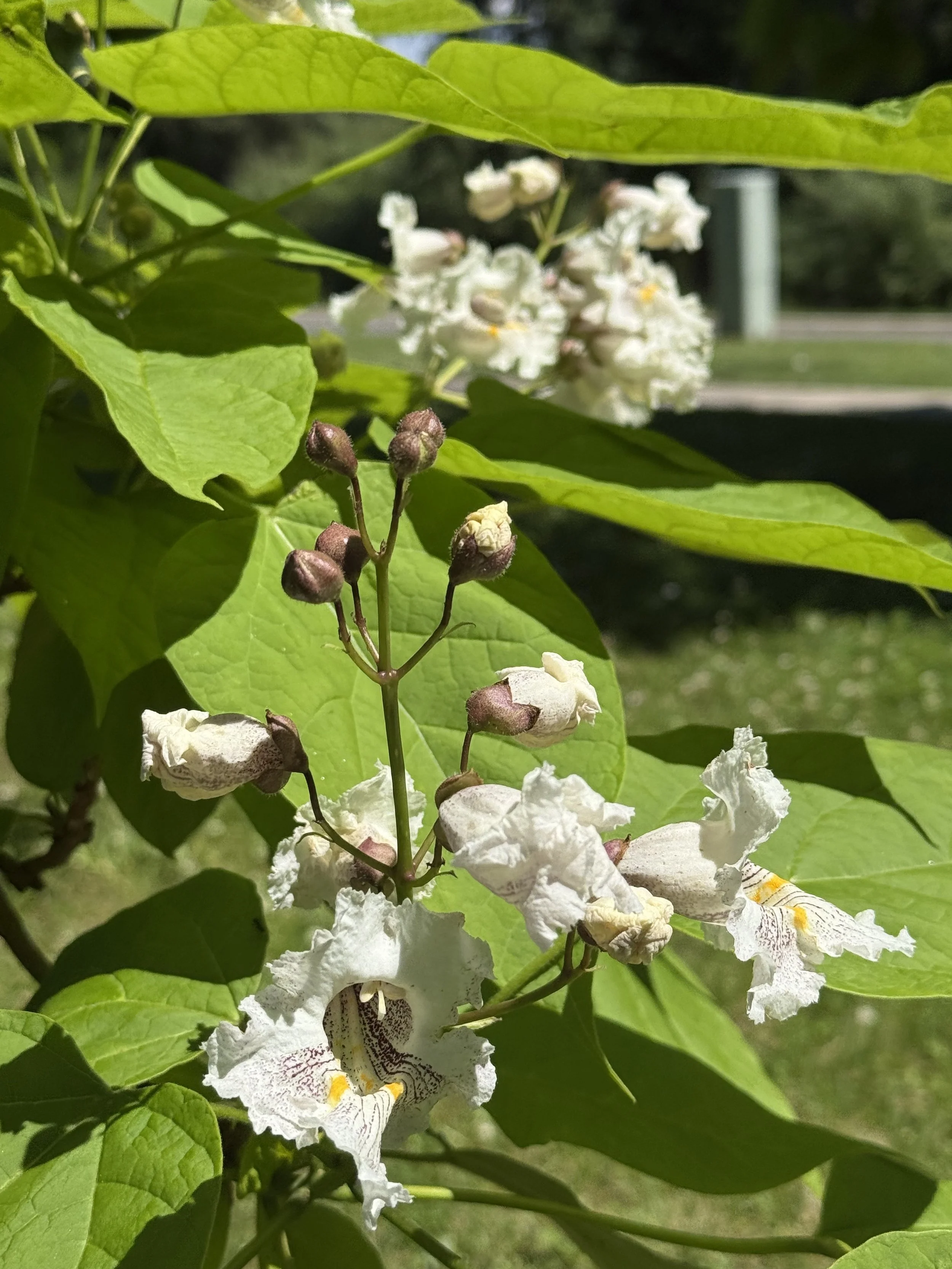
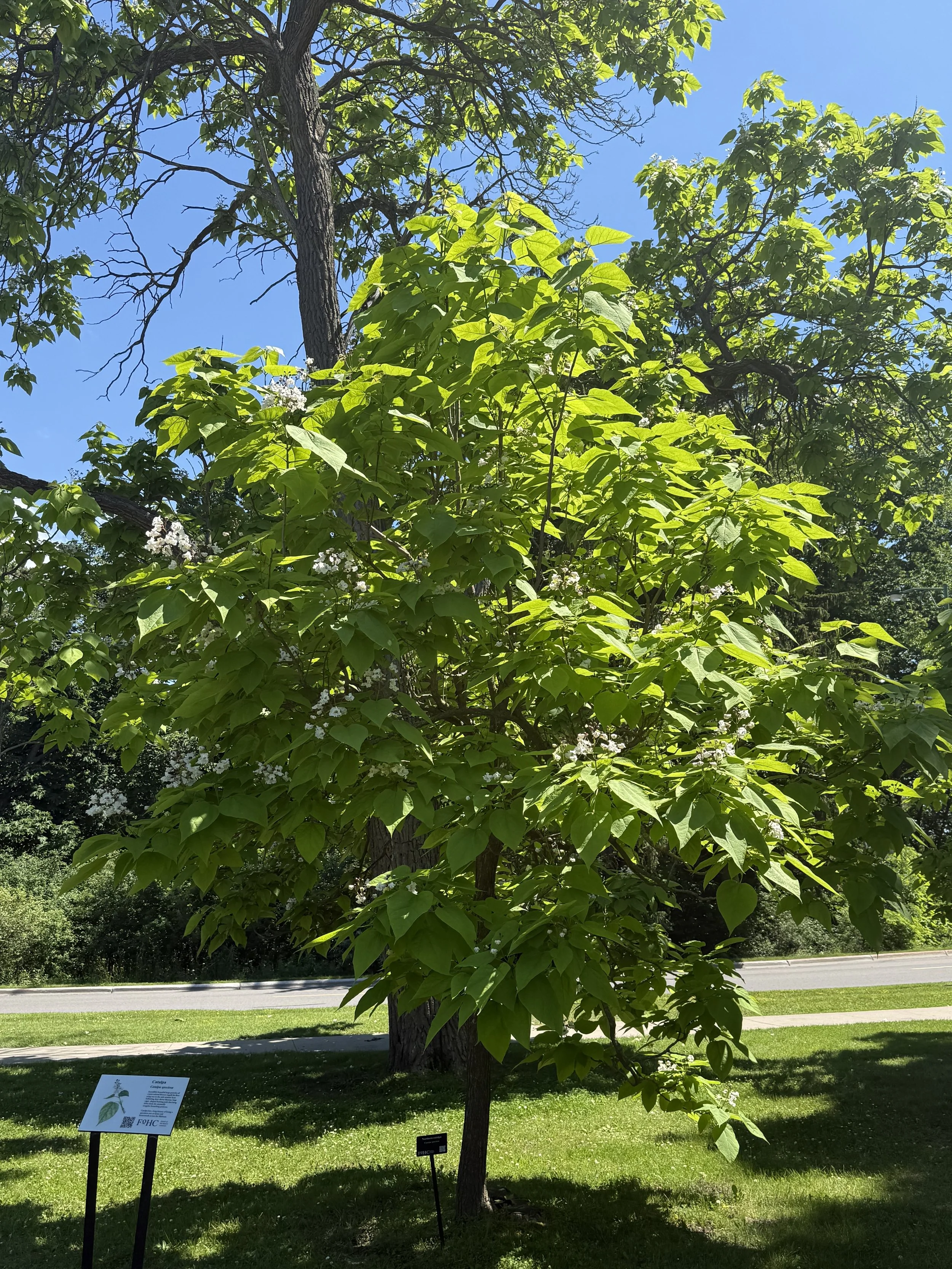
Catalpa (Catalpa speciosa)
Incredibly beautiful large panicles of cream-colored flowers engulf the flowering tree in the mid summer heat. Following their showy blooms, large cigar-shaped fruiting pods that hang down from the unusually irregular branching patterns.
Catalpa has a long history of being a specimen tree at farms and homesteads across the Midwest.
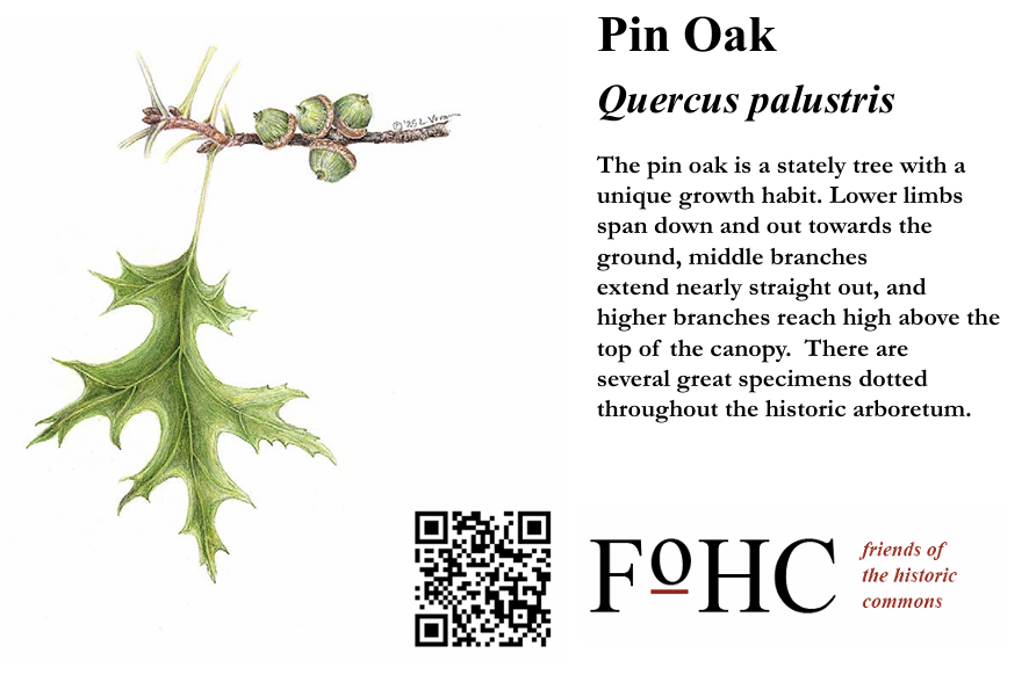
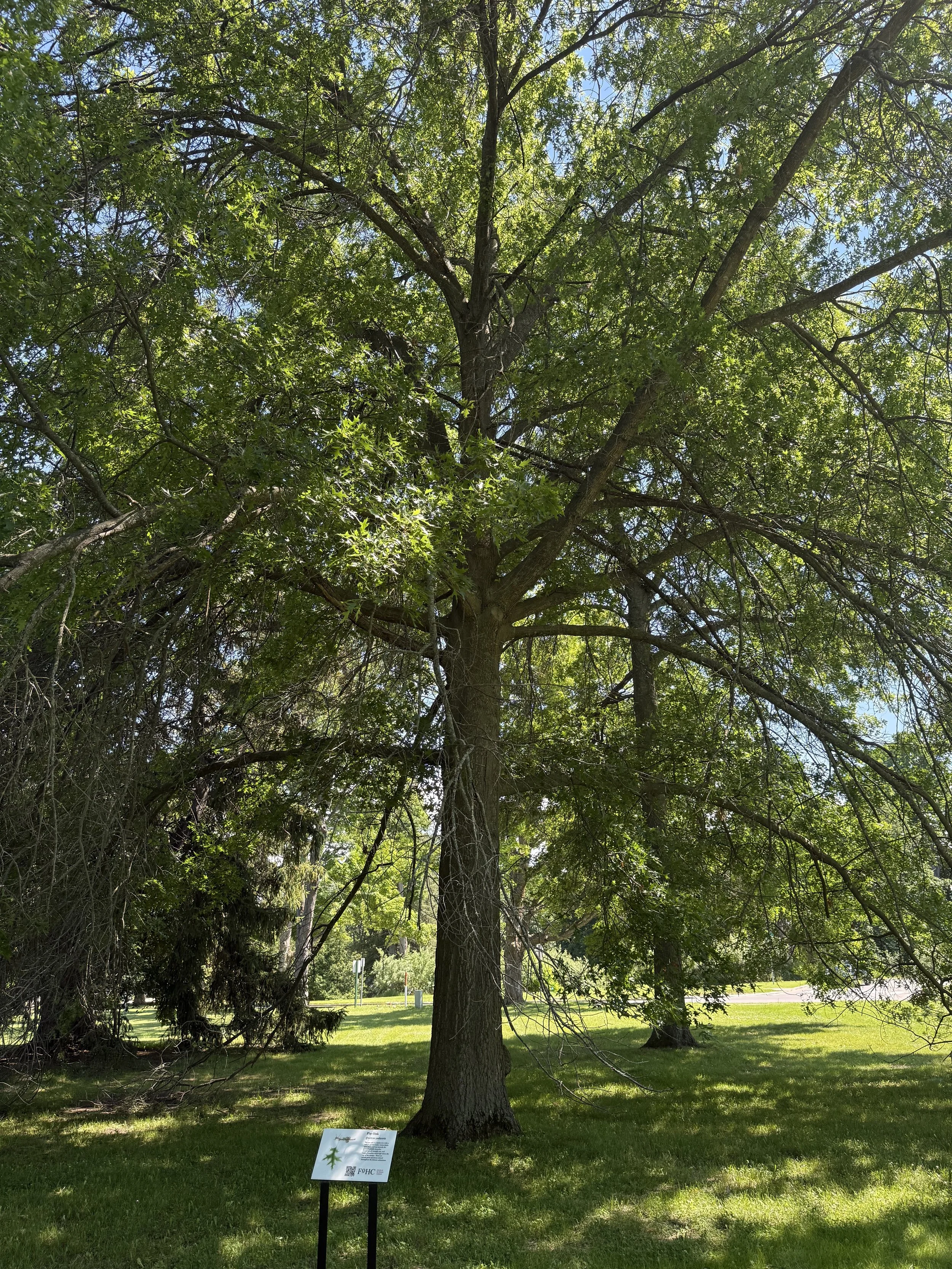
Pin Oak (Quercus palustris)
The pin oak is a stately tree with a unique growth habit. Lower limbs span down and out towards the ground, middle branches extend nearly straight out, and higher branches reach high above the top of the canopy. There are several great specimens dotted throughout the historic arboretum.
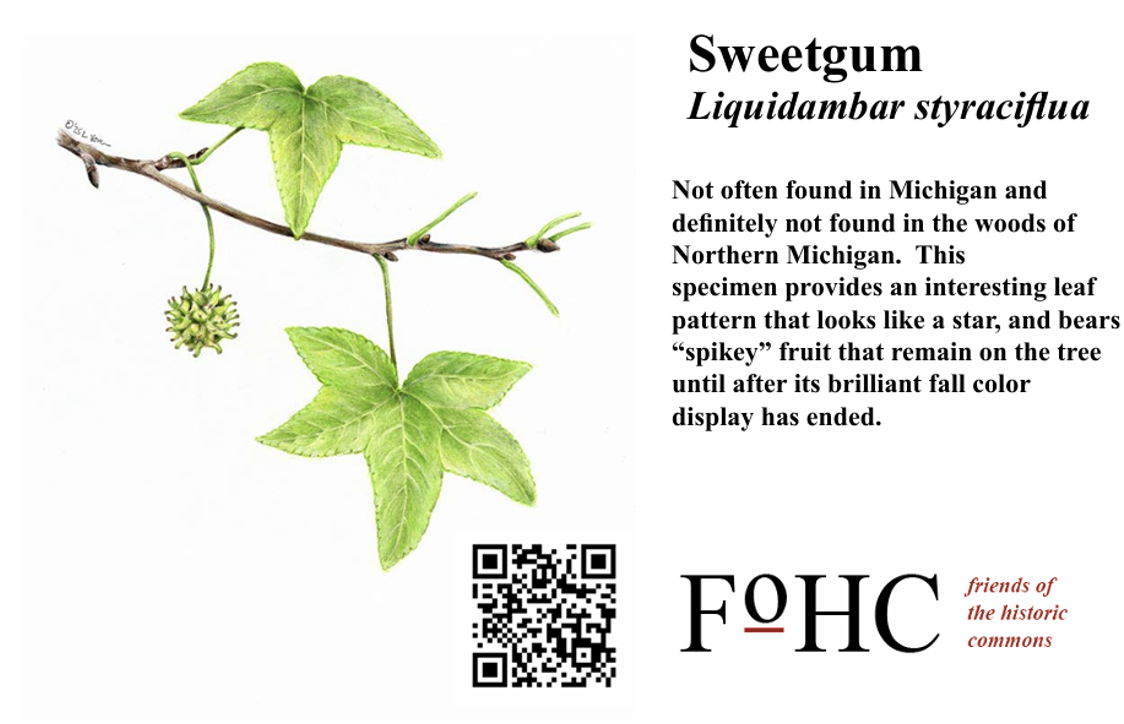
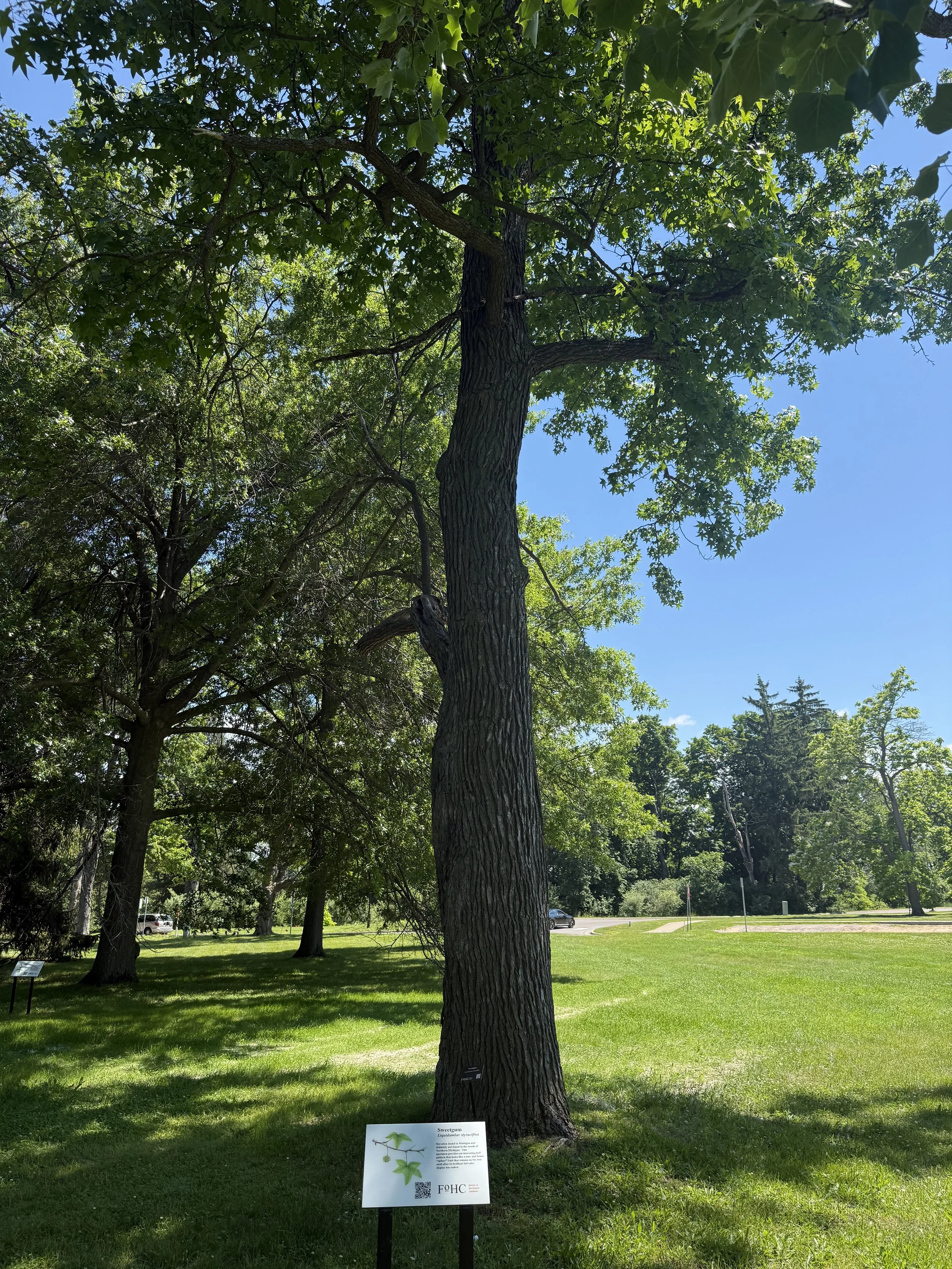
Sweetgum (Liquidambar styraciflua)
Not often found in Michigan and definitely not found in the woods of Northern Michigan. This specimen provides an interesting leaf pattern that looks like a star, and bears ‘spikey’ fruit that remain on the tree until after its brilliant fall color display has ended.
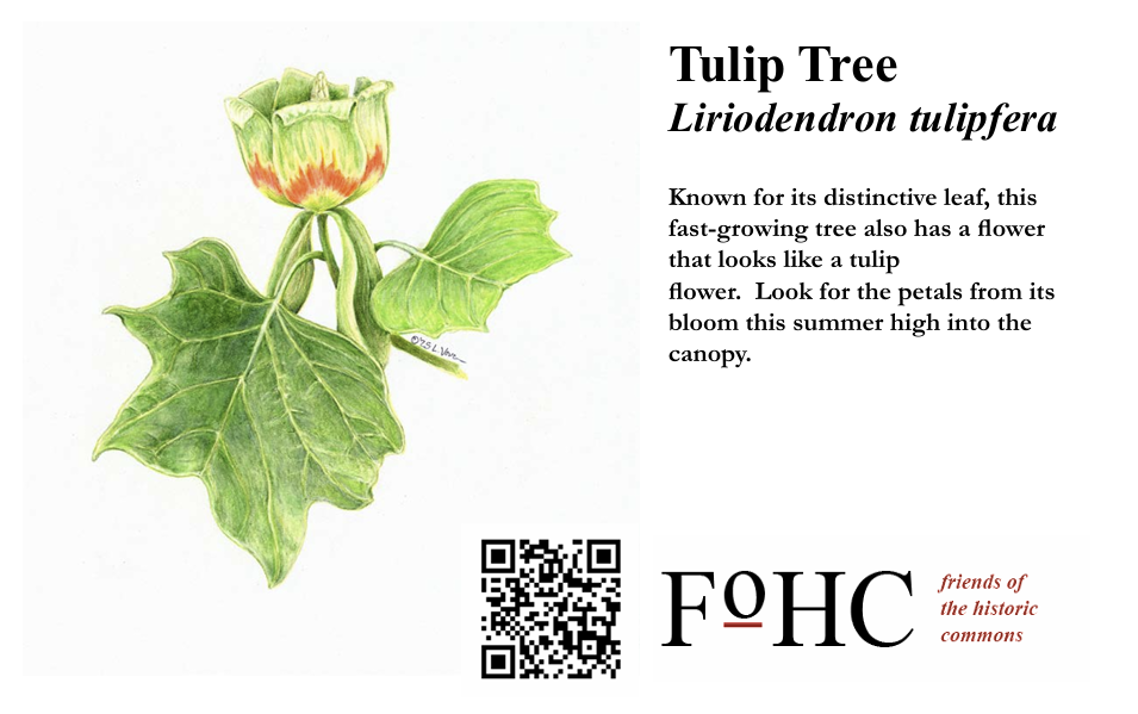
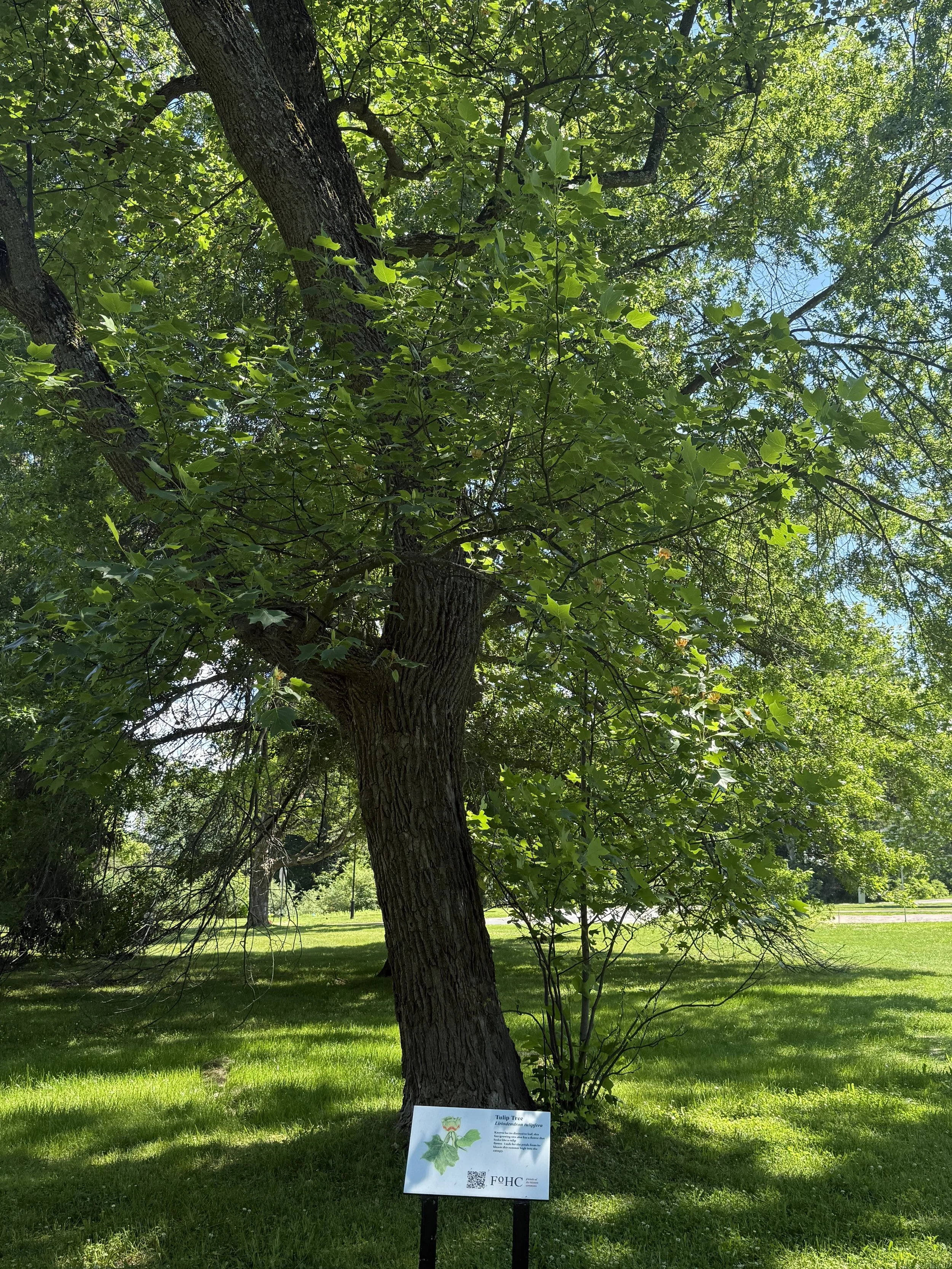
Tulip Tree (Liriodendron tulipfera)
Known for its distinctive leaf, this fast-growing tree also has a flower that looks like a tulip flower. Look for the petals from its bloom this summer high into the canopy.
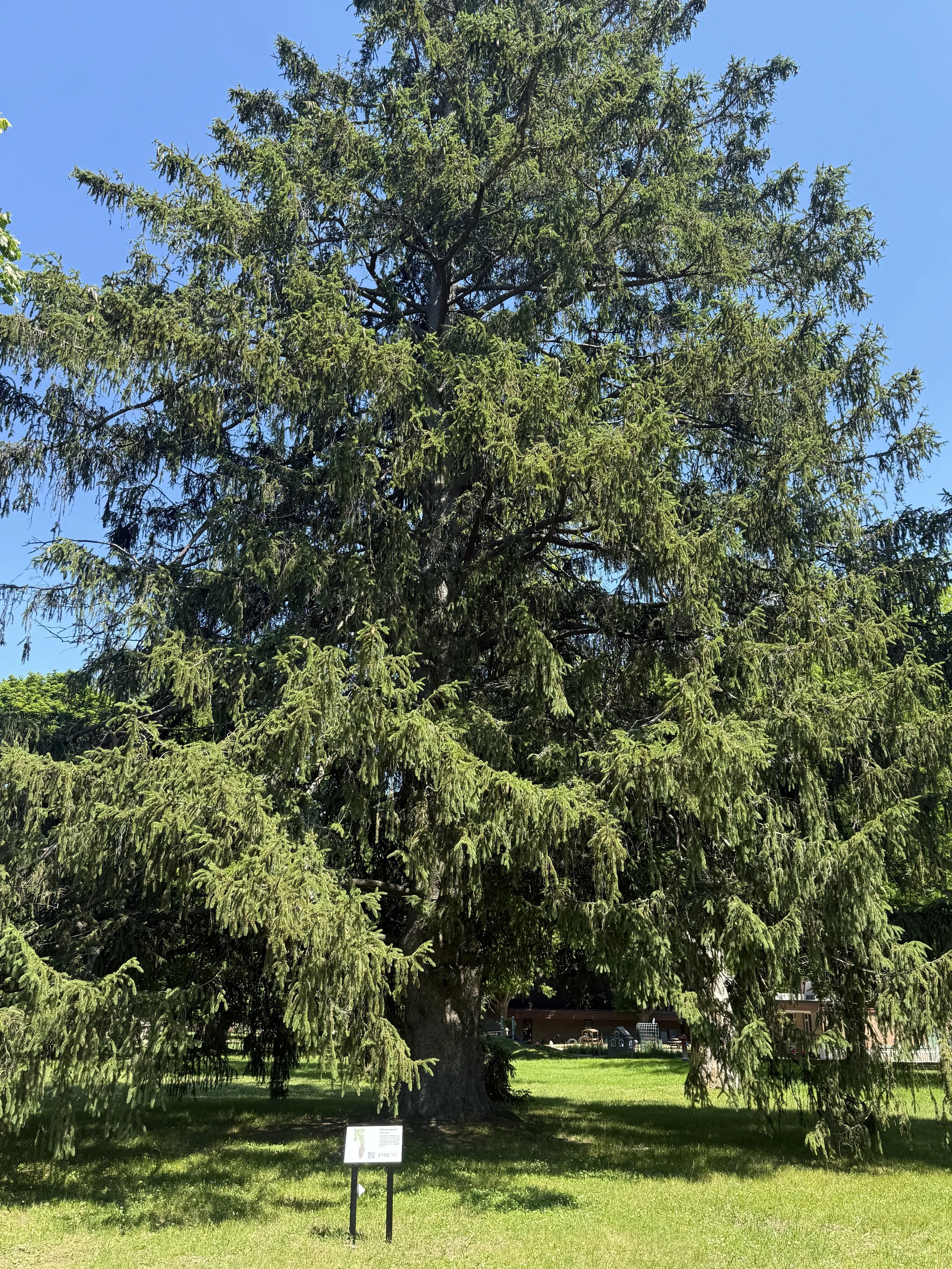
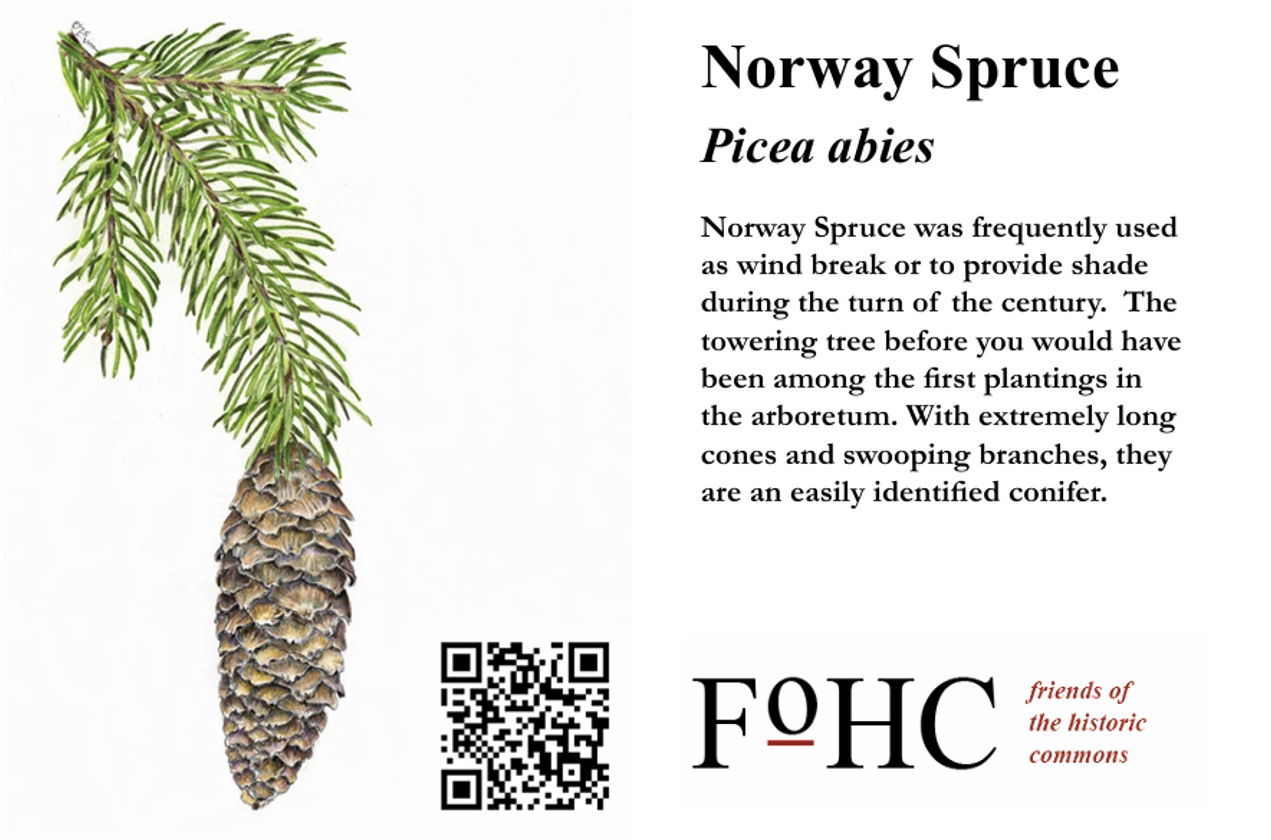
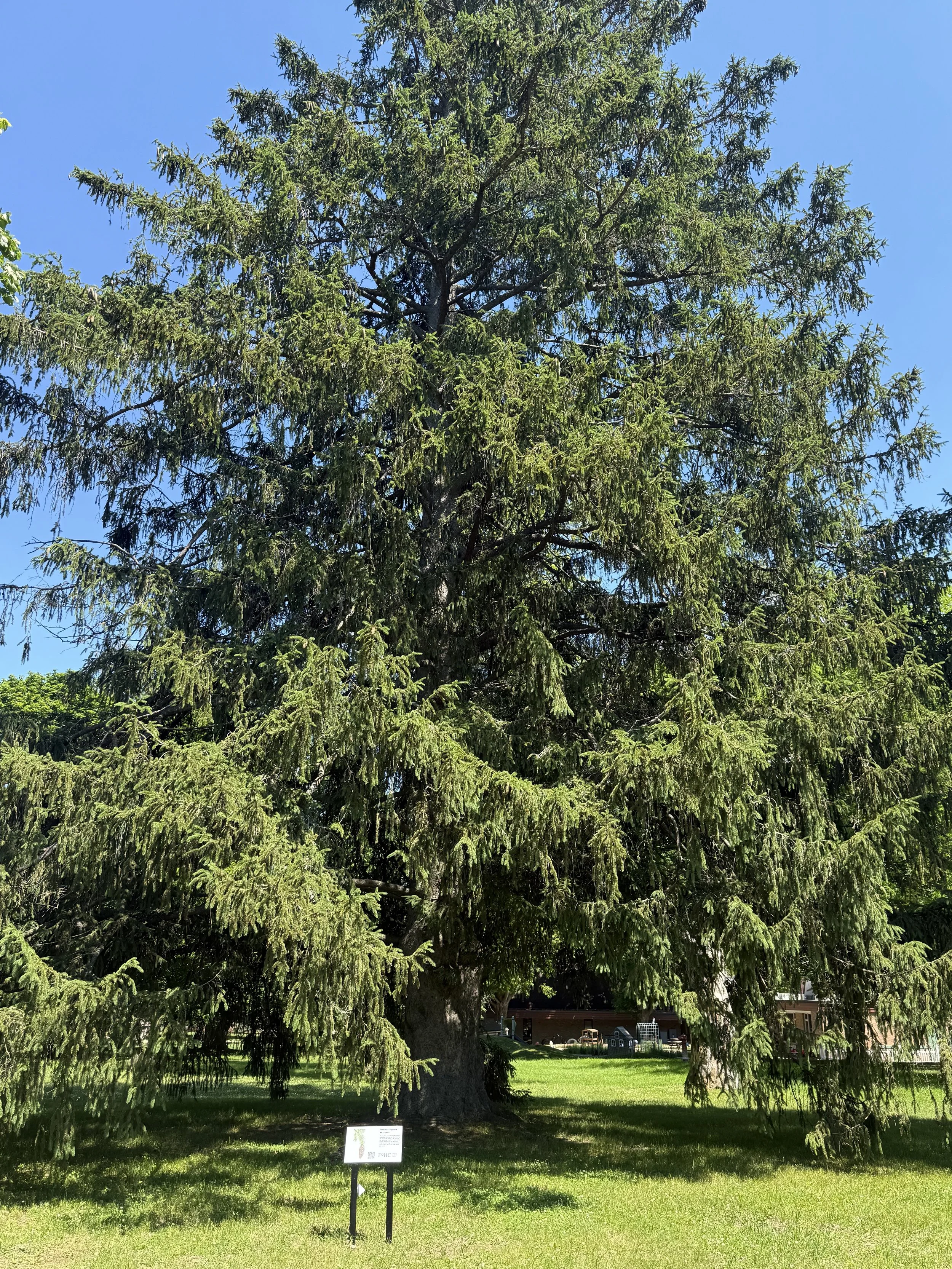
Norway Spruce (Picea abies)
Norway Spruce was frequently used as wind break or to provide shade during the turn of the century. This towering tree would have been among the first plantings in the arboretum. With extremely long cones and swooping branches, they are an easily identified conifer.
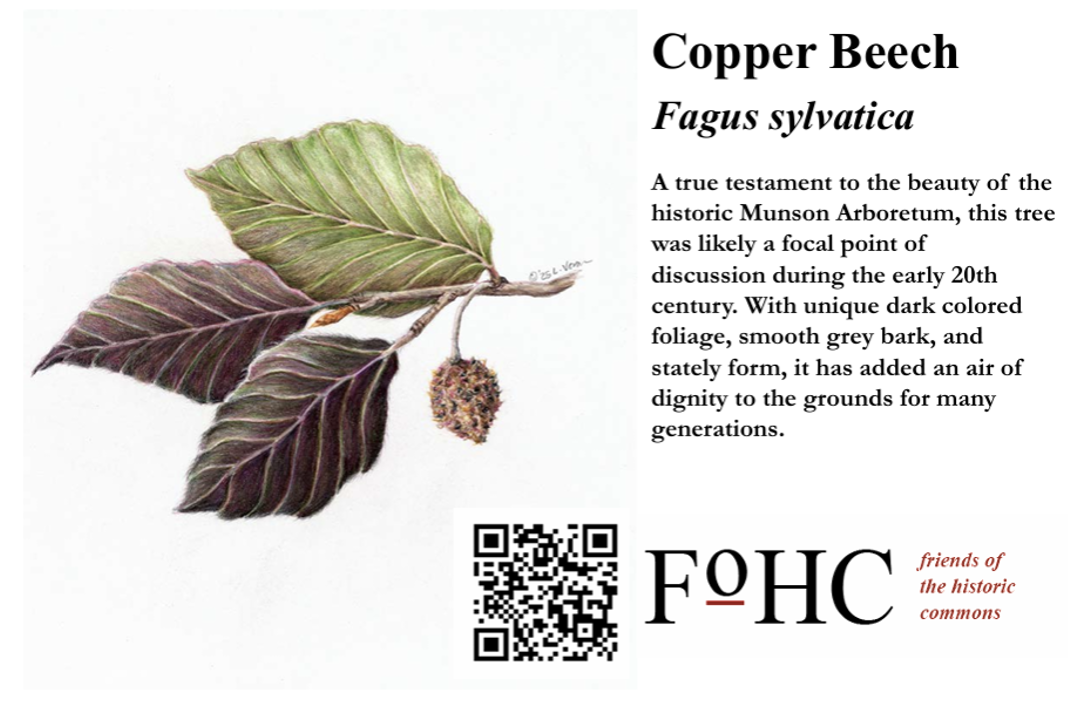
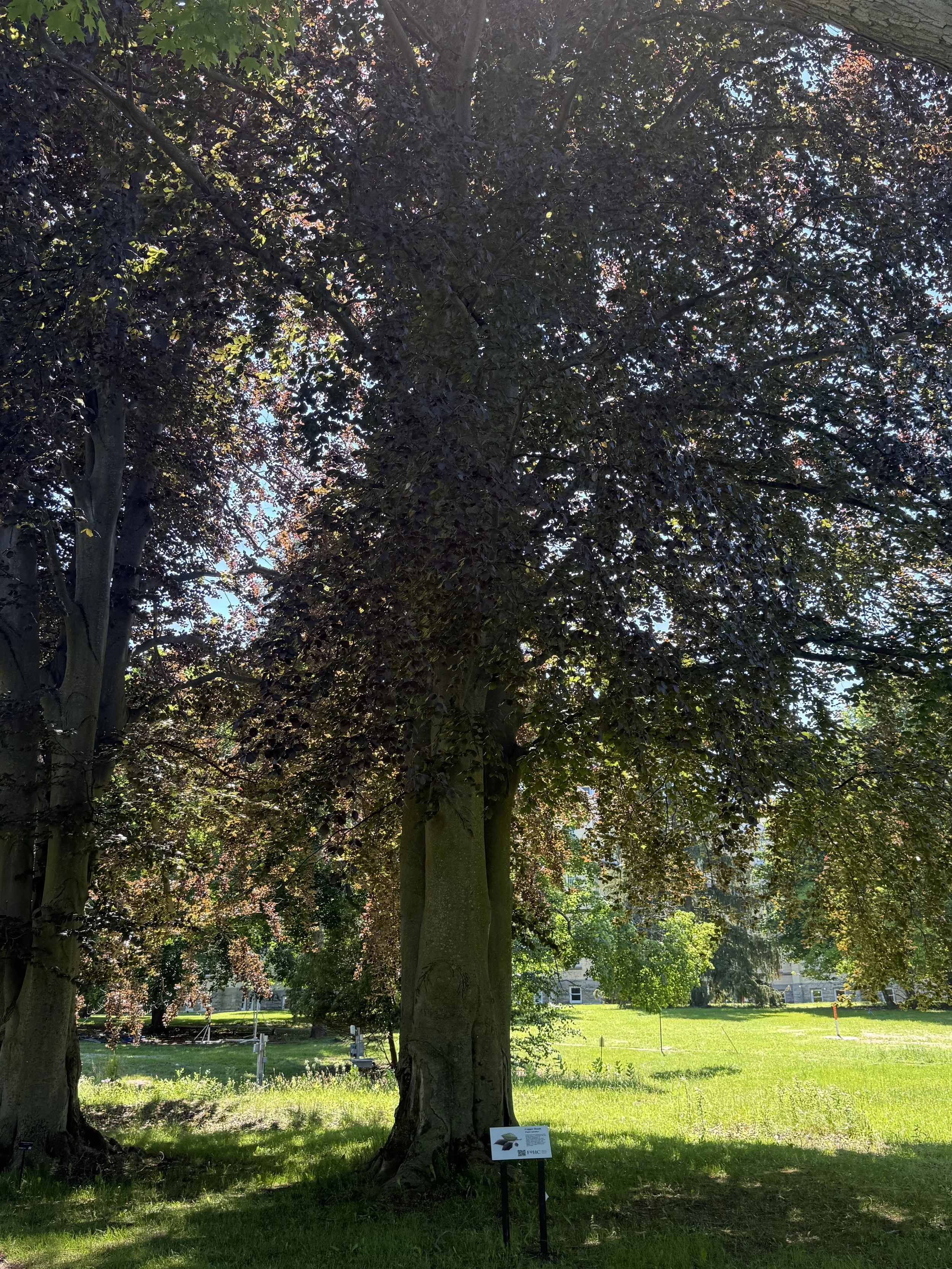
Copper Beech (Fagus sylvatica)
A true testament to the beauty of the historic Munson Arboretum, this tree was likely a focal point of discussion during the early 20th century. With unique dark colored foliage, smooth grey bark, and stately form, it has added an air of dignity to the grounds for many generations.
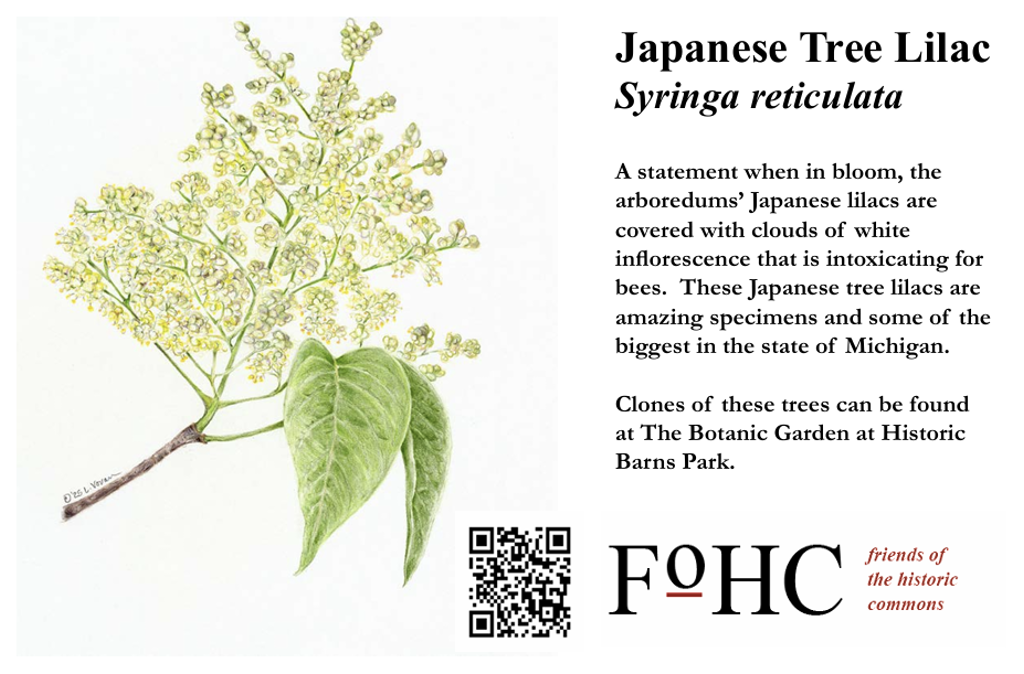
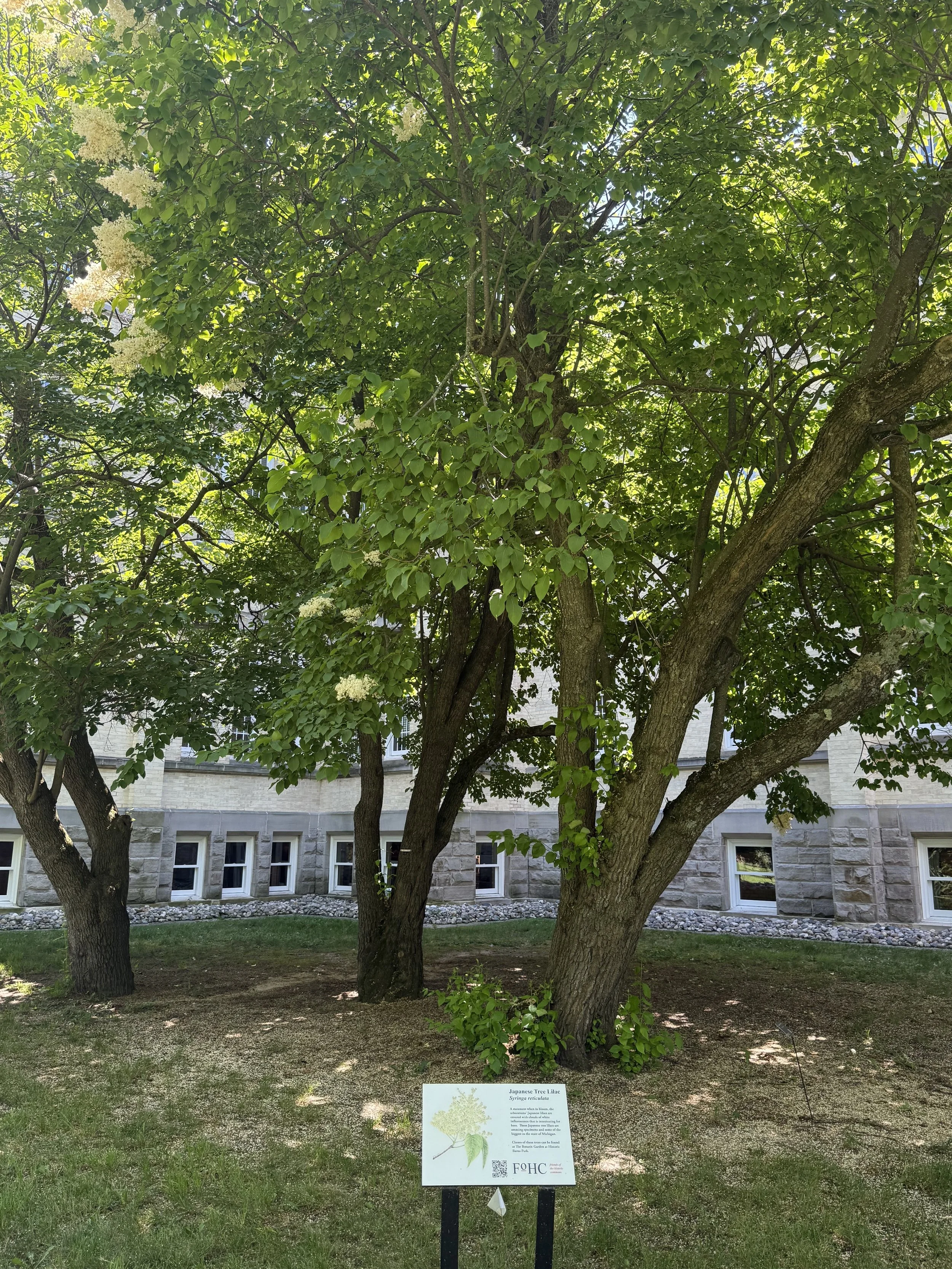
Japanese Tree Lilac (Syringa reticulata)
A statement when in bloom, the arboretums’ Japanese lilacs are covered with clouds of white inflorescence that is intoxicating for bees. These Japanese tree lilacs are amazing specimens and some of the biggest in the state of Michigan.
Clones of these trees can be found at The Botanic Garden at Historic Barns Park.
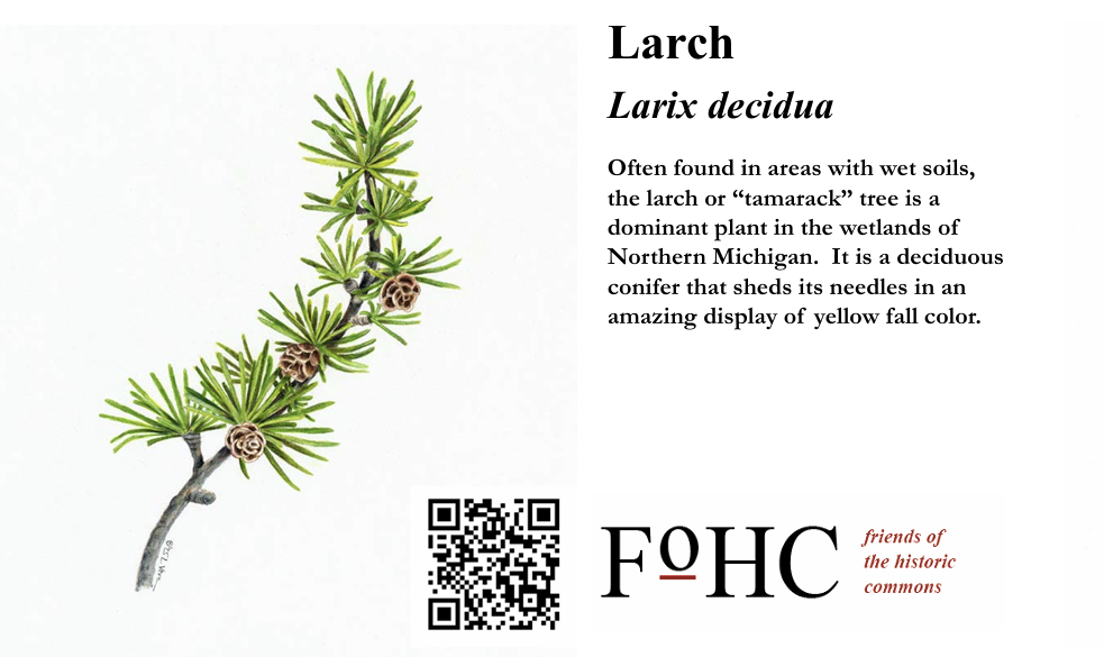
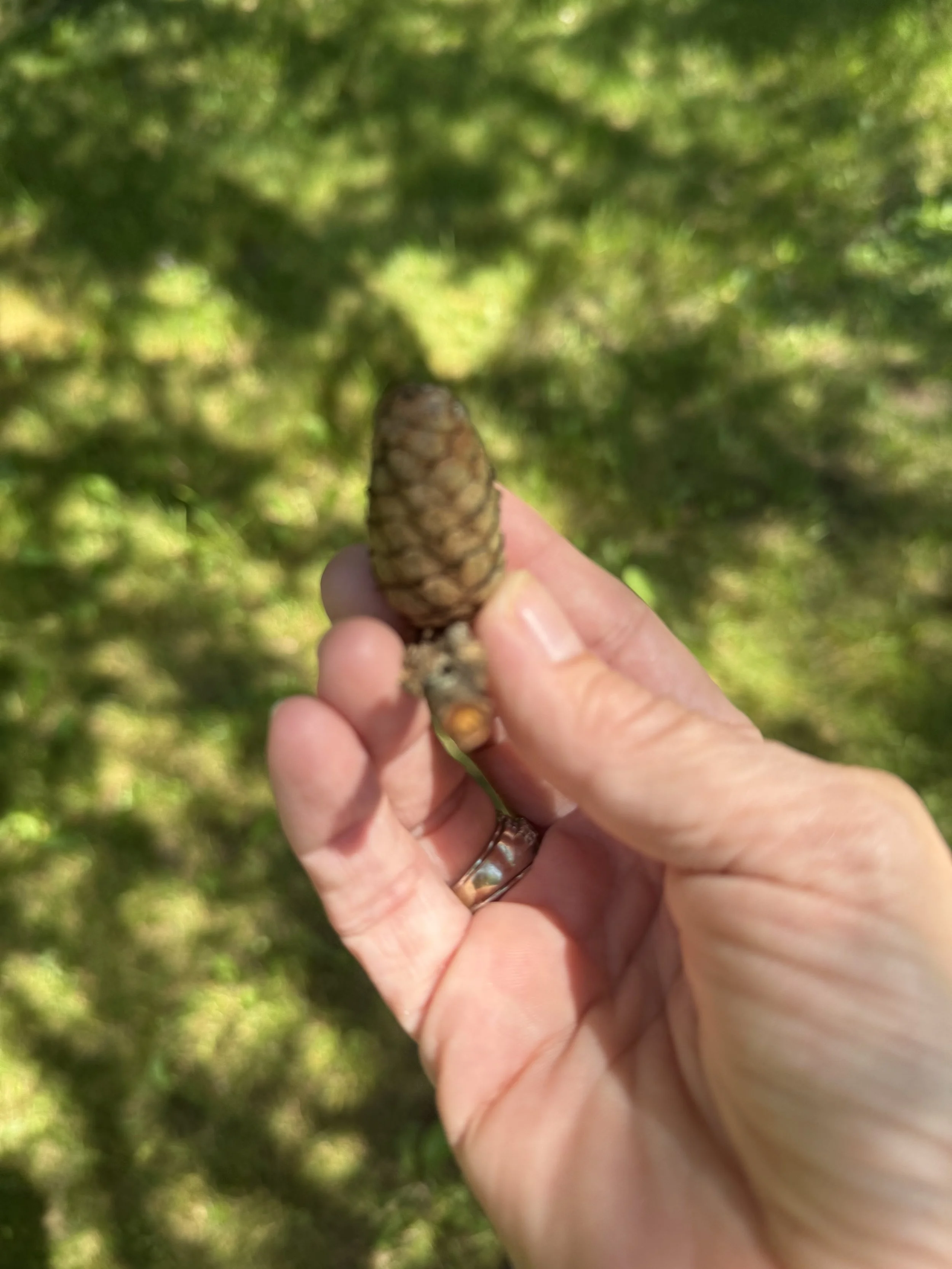
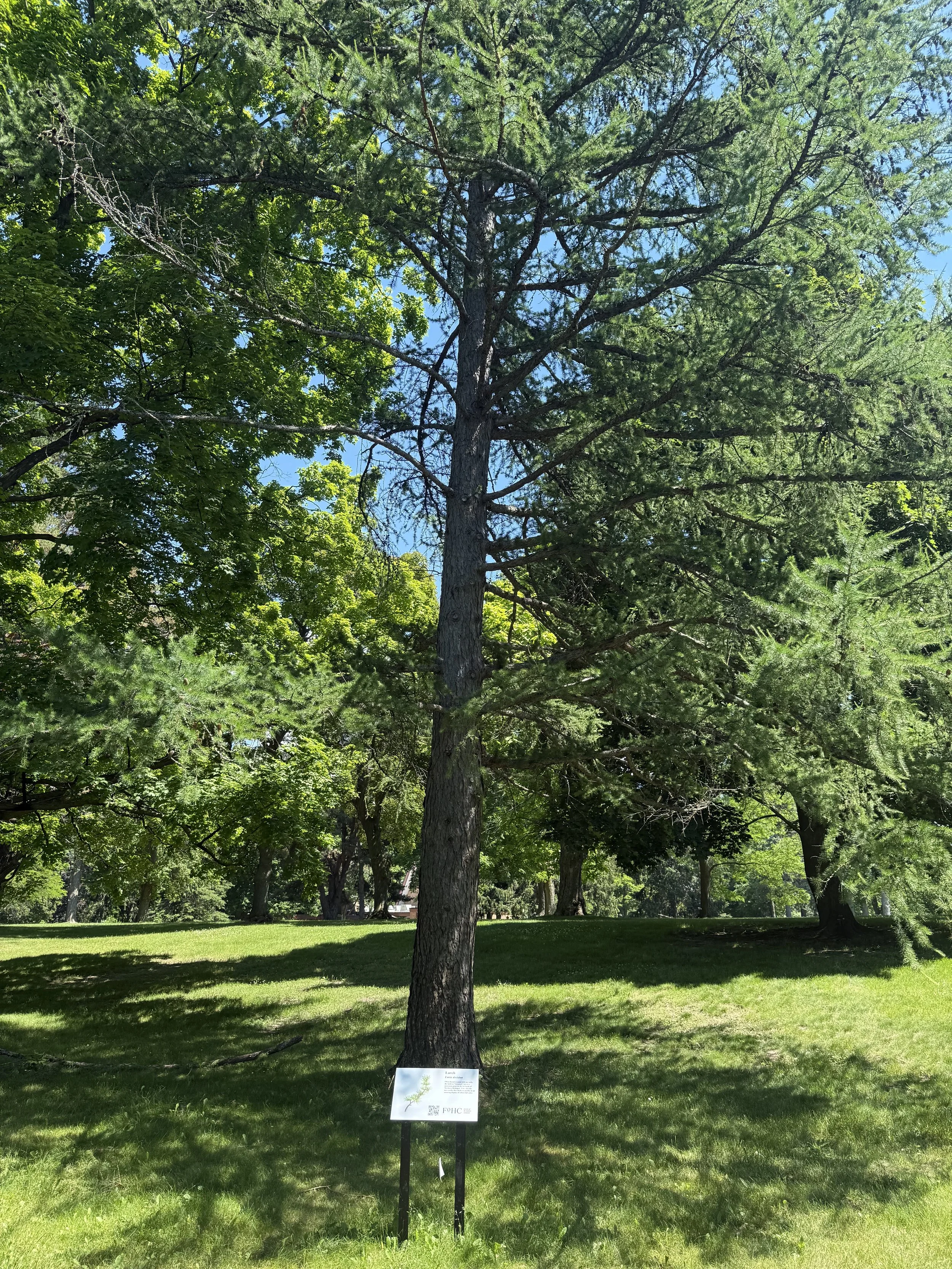
Larch (Larix decidua)
Often found in areas with wet soils, the larch or ‘tamarack’ tree is a dominant plant in the wetlands of Northern Michigan. It is a deciduous conifer that sheds its needles in an amazing display of yellow fall color.